Neurofeedback: Balancing Brains - Children Impacted by Early Traumatic Experiences
Neurofeedback is a therapy that parents can learn to administer at home. The treatment model supported by Attachment and Adoption Therapy Partners is an in-home model of neurofeedback.
Early childhood trauma impairs the development of the brain. The traumatized adoptee presents with emotional dysregulation, academic difficulties, lack of executive functions (i.e., planning, organizing, initiating and stopping actions, anticipating outcomes of actions, forming concepts, planning future behavior, being goal-directed, managing time and space, strategizing, paying attention to and remembering details, ability to cope with changes in routine, ability to cope with unstructured time, ability to follow-through and complete tasks, etc.)
Neurofeedback is a computerized therapeutic intervention designed to help "train" the brain to function in a calmer manner with increased attention, focus and reasoning skills. Please visit aboutneurofeedback.com for more information about this neurotherapy.The brain grows more the first year of life than any other point in time. Brain growth is 90% complete by the time a child is three-years-old. The young brain that experiences the insults of neglect, abuse, pre-natal substance exposure, etc., is adversely affected. Parents of these traumatized children know, the damage is - unfortunately - pervasive and enduring. Neurofeedback is a promising therapy that can help the brain recover from early hurts. Neurofeedback improves mood regulation, focus, attention, attachment, moral development learning, memory, sleep, executive functions and more!
What is Neurofeedback?
Restoring Balance
When you take your child’s temperature with a thermometer, you have used a “device” to obtain feedback about your son or daughter’s condition. You can now make choices about a course of treatment - medication, a trip to the ER, etc. Biofeedback, familiar to many, provides feedback via a “device.” Connected to a biofeedback machine by skin sensors, individuals receive feedback about heart rate, breathing and muscle tension. Those with stress-related conditions can learn to calm these bodily functions. They learn to be unperturbed by taxing circumstances.
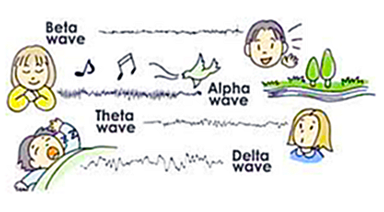
Neurofeedback is EEG biofeedback. EEG stands for electroencephalogram - a measure of the electrical energy in the brain. This energy is comprised of various wave forms - Delta, Theta, Alpha and Beta. Each has a purpose that contributes to optimal mental functioning. Each has a unique shape and rate of energy - slower or faster depending on the tasks it contributes to. Trauma causes imbalances in this energy. Wave forms are produced in excess or in deficit. For example, Delta is the slowest energy. Delta helps obtain quality sleep. We wake up rejuvenated! Delta helps with physical growth and restoration. It is needed for complex problem solving. Thus, if you parent a child with excess Delta – slow, sleep wave - you can expect this son or daughter to have foggy thinking, sleep disturbance, poor impulse control and poor judgment. It is as if your child is sleepy - chronically! In The Body Keeps the Score by Bessel van der Kolk, he states that eighty percent of children with Attention-Deficit/Hyperactivity Disorder and Posttraumatic Stress Disorder have too much slow wave activity.
Other wave forms’ tasks include:
Theta: Contributes to learning and memory. Lends to having insight, spontaneity and creativity. Imbalance of theta can cause distractibility, inattention, diminished intellectual efficiency, daydreaming or fantasy prone state, depression and anxiety.
Alpha: This is the rhythm of the brain. With healthy alpha, the brain drives itself at a nice speed. It isn’t accelerating too quickly or braking too much. So, there is a sense of peace and calm. Incoming information is processed accurately and efficiently. The task at hand can be accomplished efficiently and succinctly. Imbalance of alpha lends to a chronic high level of anxiety, perfectionism, defiance, rumination, fatigue, dissociation, learning problems, lack of excitement for life, depression and loss of focus, etc.
Beta: Maintaining a focused and alert state is what beta is all about. Imbalance lends to feeling agitated, tense and afraid. Emotional dysreglulation, dissociation or “flight,” and/or hyperarousal or “fight,” prevails. Children with excess beta are hypervigilant, constantly scanning the environment for danger.
Like musicians, each waveform must learn to play its part at a tempo that produces pleasant melodies. Neurofeedback alters the brain’s energy by decreasing or increasing the waveforms that are off key - out of balance.
Conducting neurofeedback requires placing sensors on the youngsters’ scalp. The neurotherapist monitors the brain activity on a computer screen. Programmed into the neurofeedback software are criteria for the necessary energy changes. The youngster sits viewing a movie or playing a video game. As the child focuses, the game or movie will play, and he receives visual and/or auditory feedback – a sound for example. This sound — the reward — is a signal to the brain that it is indeed making the desired energy changes. Participation in multiple sessions causes the brain to alter the flow of energy permanently.
Neurofeedback is a therapy that parents can learn to administer at home. The treatment model supported by Attachment and Adoption Therapy Partners is an in-home model of neurofeedback.
Early childhood trauma impairs the development of the brain. The traumatized adoptee presents with emotional dysregulation, academic difficulties, lack of executive functions (i.e., planning, organizing, initiating and stopping actions, anticipating outcomes of actions, forming concepts, planning future behavior, being goal-directed, managing time and space, strategizing, paying attention to and remembering details, ability to cope with changes in routine, ability to cope with unstructured time, ability to follow-through and complete tasks, etc.)
Neurofeedback is a computerized therapeutic intervention designed to help "train" the brain to function in a calmer manner with increased attention, focus and reasoning skills. Please visit aboutneurofeedback.com for more information about this neurotherapy.The brain grows more the first year of life than any other point in time. Brain growth is 90% complete by the time a child is three-years-old. The young brain that experiences the insults of neglect, abuse, pre-natal substance exposure, etc., is adversely affected. Parents of these traumatized children know, the damage is - unfortunately - pervasive and enduring. Neurofeedback is a promising therapy that can help the brain recover from early hurts. Neurofeedback improves mood regulation, focus, attention, attachment, moral development learning, memory, sleep, executive functions and more!
What is Neurofeedback?
Restoring Balance
When you take your child’s temperature with a thermometer, you have used a “device” to obtain feedback about your son or daughter’s condition. You can now make choices about a course of treatment - medication, a trip to the ER, etc. Biofeedback, familiar to many, provides feedback via a “device.” Connected to a biofeedback machine by skin sensors, individuals receive feedback about heart rate, breathing and muscle tension. Those with stress-related conditions can learn to calm these bodily functions. They learn to be unperturbed by taxing circumstances.
Neurofeedback is EEG biofeedback. EEG stands for electroencephalogram - a measure of the electrical energy in the brain. This energy is comprised of various wave forms - Delta, Theta, Alpha and Beta. Each has a purpose that contributes to optimal mental functioning. Each has a unique shape and rate of energy - slower or faster depending on the tasks it contributes to. Trauma causes imbalances in this energy. Wave forms are produced in excess or in deficit. For example, Delta is the slowest energy. Delta helps obtain quality sleep. We wake up rejuvenated! Delta helps with physical growth and restoration. It is needed for complex problem solving. Thus, if you parent a child with excess Delta – slow, sleep wave - you can expect this son or daughter to have foggy thinking, sleep disturbance, poor impulse control and poor judgment. It is as if your child is sleepy - chronically! In The Body Keeps the Score by Bessel van der Kolk, he states that eighty percent of children with Attention-Deficit/Hyperactivity Disorder and Posttraumatic Stress Disorder have too much slow wave activity.
Other wave forms’ tasks include:
Theta: Contributes to learning and memory. Lends to having insight, spontaneity and creativity. Imbalance of theta can cause distractibility, inattention, diminished intellectual efficiency, daydreaming or fantasy prone state, depression and anxiety.
Alpha: This is the rhythm of the brain. With healthy alpha, the brain drives itself at a nice speed. It isn’t accelerating too quickly or braking too much. So, there is a sense of peace and calm. Incoming information is processed accurately and efficiently. The task at hand can be accomplished efficiently and succinctly. Imbalance of alpha lends to a chronic high level of anxiety, perfectionism, defiance, rumination, fatigue, dissociation, learning problems, lack of excitement for life, depression and loss of focus, etc.
Beta: Maintaining a focused and alert state is what beta is all about. Imbalance lends to feeling agitated, tense and afraid. Emotional dysreglulation, dissociation or “flight,” and/or hyperarousal or “fight,” prevails. Children with excess beta are hypervigilant, constantly scanning the environment for danger.
Like musicians, each waveform must learn to play its part at a tempo that produces pleasant melodies. Neurofeedback alters the brain’s energy by decreasing or increasing the waveforms that are off key - out of balance.
Conducting neurofeedback requires placing sensors on the youngsters’ scalp. The neurotherapist monitors the brain activity on a computer screen. Programmed into the neurofeedback software are criteria for the necessary energy changes. The youngster sits viewing a movie or playing a video game. As the child focuses, the game or movie will play, and he receives visual and/or auditory feedback – a sound for example. This sound — the reward — is a signal to the brain that it is indeed making the desired energy changes. Participation in multiple sessions causes the brain to alter the flow of energy permanently.
Neurofeedback heals the brain by restoring balance.
Improving Brain Communication
Balancing the brain’s energy lends to improving the communication among the brain’s neuroanatomical structures - brain sites. These brain sites perform individual and joint functions. Groups of sites also operate as networks. The Default Mode Network (DMN) is one network to tune into.
The DMN is active when our thoughts drift. We have all experienced mind wandering when sitting through meetings. Our attention drifts. We wander off into fantasizing, creating “to do” lists or ruminating, re-living a negative experience over and over, or stressing about an upcoming event. Rumination plagues kids with early histories of trauma! Many are “stuck” re-playing traumatic memories and/or creating fantasies about their birth family. Letting go and moving forward is hard for the child incubated in adverse experiences.
The DMN performs other vital tasks too. It is critical to our ability to forge healthy attachments. One main hub of the DMN is the Posterior Cingulate. This brain area - reliant on quality parenting to develop - gives us our sense of security about our relationships and our environment. The DMN plays a key role in moral development and problem-solving skills. Neurofeedback enhances the functioning of the DMN. Kids can put their past in perspective, connect more closely with mom, dad, brothers and sisters, develop a greater sense of right and wrong - a moral compass and generate solutions to manage life’s daily difficulties.
Conclusion
Neurofeedback is a very hopeful way to mitigate or cease trauma residue! Day-to-day, we can also help the brain recover from early trauma,
Mindfulness meditation helps children gain control over their DMN. The book, Sitting Still Like a Frog: Mindfulness Exercises for Kids (and their parents) by Eline Snel offers wonderful ways to implement a daily mindful regimen.
Provide children ample time for unstructured play. Playing freely has a direct impact on brain development, especially the skills: sharing, negotiating, conflict resolution, self-advocacy, self-confidence, initiative, creativity, imagination, cooperation, communication, etc. If your traumatized struggles to play, Welcoming a New Brother or Sister through Adoption offers ways for each member of the family to bring out the playful side of the formerly traumatized youngster.
Shed anger. Parenting the traumatized child is about reactions. This is certainly more easily said than done! Conflict sends the child deeper into emotional dysregulation, flight or fight — negative behaviors occur in these states! Composed parent and child exchanges teach the brain that winding up to a full blown temper tantrum isn’t necessary! A calmer brain can begin to re-organize itself. Healing happens! View “No Anger Zone: Maintaining a Peaceful Emotional Climate in Adoptive Families"
Allow natural and logical experiences to occur - frequently! Cause-and-effect thinking is an essential building block of moral development. The Love and Logic resources are designed to help parents and professionals implement strategies that result in natural and logical learning experiences.
Executive functions - planning, reasoning, initiating and stopping actions, anticipating outcomes of actions, forming concepts, planning future behavior, being goal-directed, managing time and space, strategizing, coping with changes in routine, coping with unstructured time, following-through and completing tasks, etc. - lag in the child with an early trauma history! Limited executive functions jeopardize children’s futures. Visit Harvard University's "Executive Function and Self-Regulation" information to help kids re-build these vital life skills!
Enhance academic outcomes and end nightly homework battles by implementing brain-based learning strategies. Visit Trauma Sensitive Schools to view their publications, “Helping Traumatized Children Learn” and “Creating and Advocating for Trauma-Sensitive Schools.”
Improving Brain Communication
Balancing the brain’s energy lends to improving the communication among the brain’s neuroanatomical structures - brain sites. These brain sites perform individual and joint functions. Groups of sites also operate as networks. The Default Mode Network (DMN) is one network to tune into.
The DMN is active when our thoughts drift. We have all experienced mind wandering when sitting through meetings. Our attention drifts. We wander off into fantasizing, creating “to do” lists or ruminating, re-living a negative experience over and over, or stressing about an upcoming event. Rumination plagues kids with early histories of trauma! Many are “stuck” re-playing traumatic memories and/or creating fantasies about their birth family. Letting go and moving forward is hard for the child incubated in adverse experiences.
The DMN performs other vital tasks too. It is critical to our ability to forge healthy attachments. One main hub of the DMN is the Posterior Cingulate. This brain area - reliant on quality parenting to develop - gives us our sense of security about our relationships and our environment. The DMN plays a key role in moral development and problem-solving skills. Neurofeedback enhances the functioning of the DMN. Kids can put their past in perspective, connect more closely with mom, dad, brothers and sisters, develop a greater sense of right and wrong - a moral compass and generate solutions to manage life’s daily difficulties.
Conclusion
Neurofeedback is a very hopeful way to mitigate or cease trauma residue! Day-to-day, we can also help the brain recover from early trauma,
Mindfulness meditation helps children gain control over their DMN. The book, Sitting Still Like a Frog: Mindfulness Exercises for Kids (and their parents) by Eline Snel offers wonderful ways to implement a daily mindful regimen.
Provide children ample time for unstructured play. Playing freely has a direct impact on brain development, especially the skills: sharing, negotiating, conflict resolution, self-advocacy, self-confidence, initiative, creativity, imagination, cooperation, communication, etc. If your traumatized struggles to play, Welcoming a New Brother or Sister through Adoption offers ways for each member of the family to bring out the playful side of the formerly traumatized youngster.
Shed anger. Parenting the traumatized child is about reactions. This is certainly more easily said than done! Conflict sends the child deeper into emotional dysregulation, flight or fight — negative behaviors occur in these states! Composed parent and child exchanges teach the brain that winding up to a full blown temper tantrum isn’t necessary! A calmer brain can begin to re-organize itself. Healing happens! View “No Anger Zone: Maintaining a Peaceful Emotional Climate in Adoptive Families"
Allow natural and logical experiences to occur - frequently! Cause-and-effect thinking is an essential building block of moral development. The Love and Logic resources are designed to help parents and professionals implement strategies that result in natural and logical learning experiences.
Executive functions - planning, reasoning, initiating and stopping actions, anticipating outcomes of actions, forming concepts, planning future behavior, being goal-directed, managing time and space, strategizing, coping with changes in routine, coping with unstructured time, following-through and completing tasks, etc. - lag in the child with an early trauma history! Limited executive functions jeopardize children’s futures. Visit Harvard University's "Executive Function and Self-Regulation" information to help kids re-build these vital life skills!
Enhance academic outcomes and end nightly homework battles by implementing brain-based learning strategies. Visit Trauma Sensitive Schools to view their publications, “Helping Traumatized Children Learn” and “Creating and Advocating for Trauma-Sensitive Schools.”